1948 – 2020
Terry Goodkind
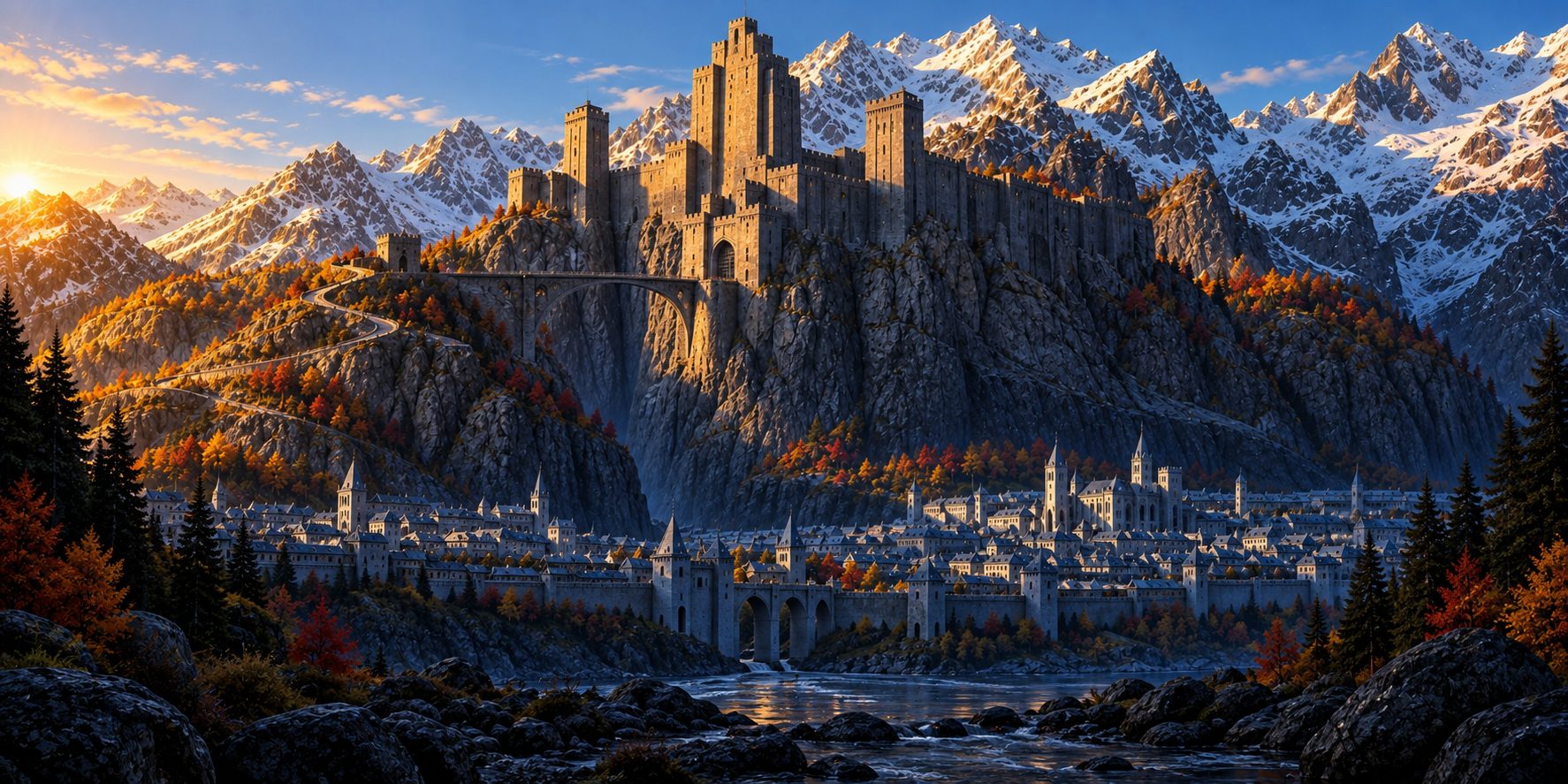
He wrote a mountain with a fortress cut into it, a sword that answers to truth, and magic that obeys laws the way stone obeys weight. He wrote a boundary made out of the world of the dead, and a palace so large that it is a city standing on a plateau. He wrote women whose touch takes a person’s will and leaves only the truth, and eleven rules about the way people think that need no magic at all.
Why this site exists
A door standing open
This is a tribute to a storyteller, and it hopes for one thing. Somewhere in the next few screens you should set this aside and go open one of his books. Everything here is a door, and the door is standing open.
Terry Goodkind wrote the Sword of Truth — eleven novels beginning with Wizard’s First Rule in 1994 — and around them a shelf of prequels, sequels and companions that runs to thirty-two books. They sold more than twenty-five million copies in more than twenty languages. That is the small part of it.
The large part is that readers who found these books at fifteen were still quoting them at forty. They quote the rules. They quote a paragraph about a speck of time. Something in the work went in deep and stayed there.
He built the magic the way he built cabinets, and it holds. Additive magic adds to what is already there. Subtractive magic takes it away. Wizard’s fire is heat drawn out of the air and piled into a shape. The Boundary between the lands is the world of the dead, stood up on its edge by wizards who needed a lock and had nothing else strong enough to make one. Magic with laws means choices with weight, and nothing in these books is ever solved by a wish.
Weight is what lets a story mean something. His are about a person who thinks, who loves, who builds, and who keeps his own life as his own. He called them “the American ideal of life, liberty and the pursuit of happiness.” He also said it shorter, and he said it twice: once cut into the base of a sundial in Faith of the Fallen, and once at the close of Confessor, where the last thing Richard does is abolish the kneeling — there will be no more devotions; none of you have to kneel before me or anyone else — and then say the ten words readers have carried out of the books ever since:
Your life is yours alone. Rise up and live it.
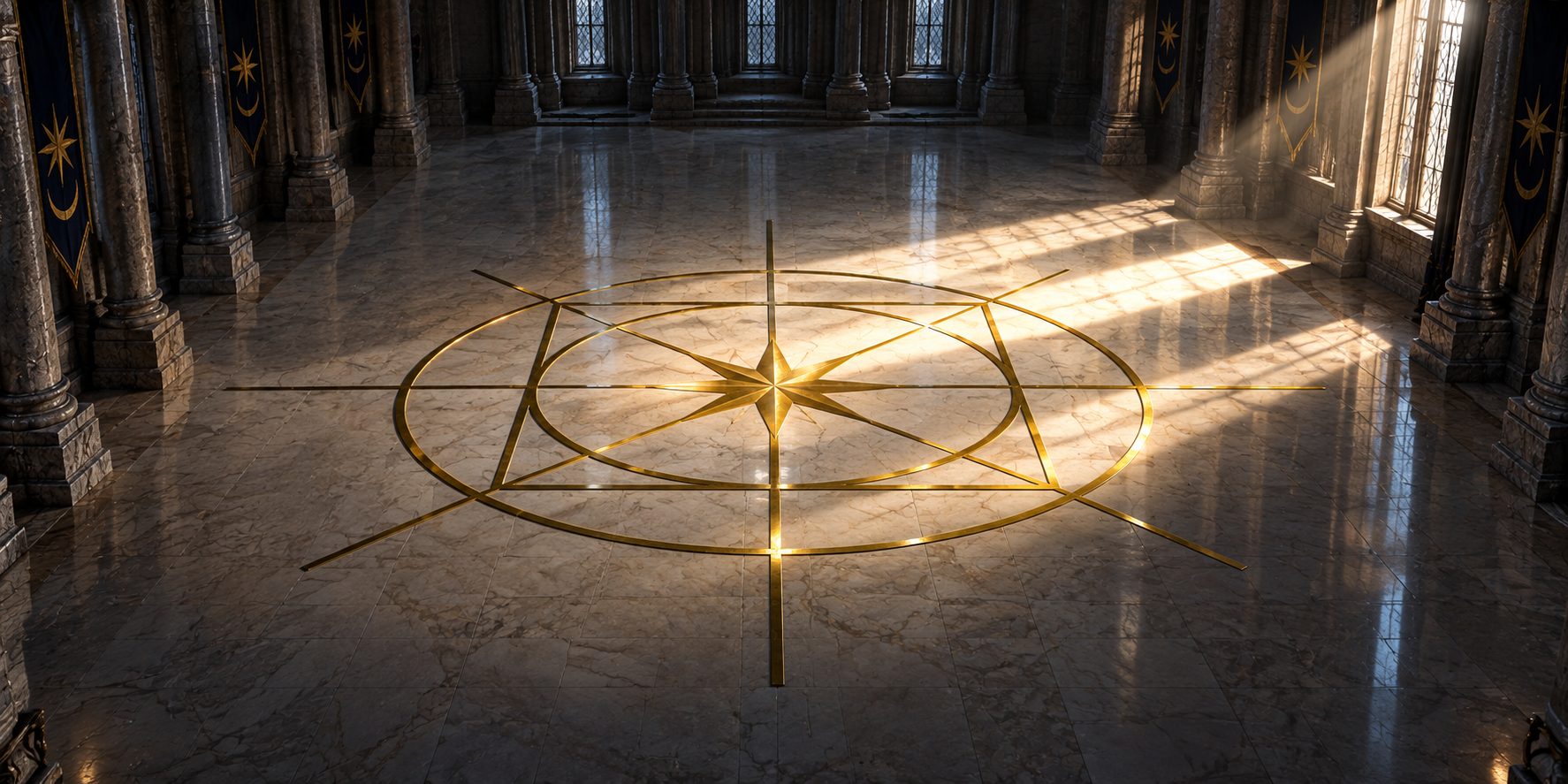
This is the Grace, drawn in sorcerer’s sand. The star at the center is the gift. The inner circle is the world of the living. The square is the veil. The outer circle is the underworld. And the rays pass from the star outward through all of it, and keep going.
Which is the same claim as the sentence above, drawn instead of written. The gift passes through the world of the living. It is here, and it is yours, and it does not stop at the edge of what you can see. The five chapters of this site are its five parts, read from the center outward.
The Gift
The man. A boy with dyslexia who told himself stories because the page fought him, who grew up to build cabinets and violins and paint the sea, and who wrote his first novel at forty-five.
the inner circle · the livingThe World of the Living
The Keep, the Boundary, Agaden Reach, and the people who walk them. A world with weather in it, and roads you can feel underfoot.
the square · the veilThe Rules
Eleven Wizard’s Rules, one to a novel: hard-won teachings, and every one of them still good on a Tuesday afternoon in this world.
the outer circle · what came afterThe Legacy
What was said when he died, by a novelist, a bookshop and a friend. The last book he saw published, and the ones that kept coming without him.
the rays · onwardThe Books
The whole shelf, in order, with every ending left intact. And a straight answer to the only question that matters: where do I start?

From the dead side
From the world of the living
A law, standing up
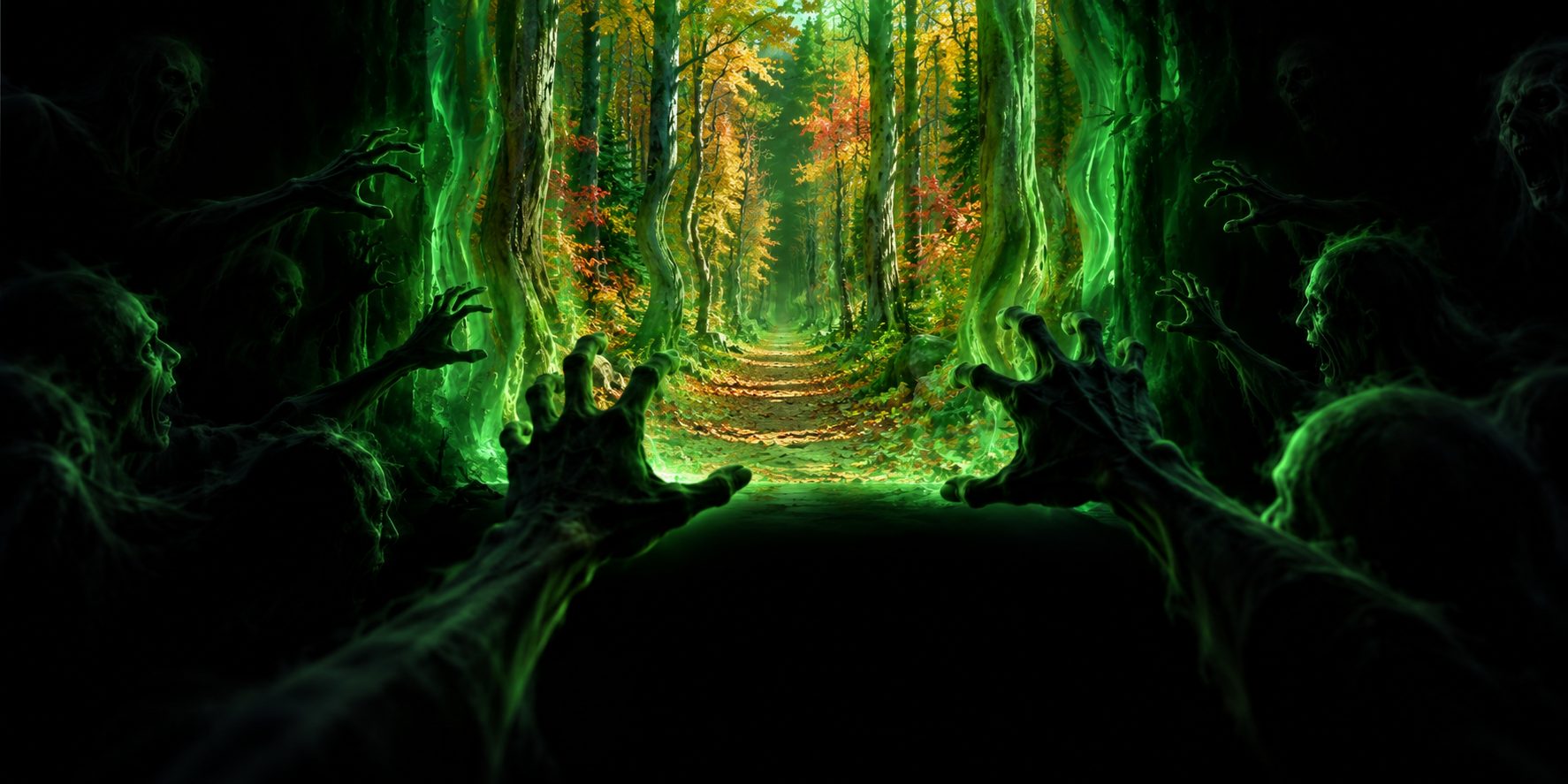
The Boundary is the world of the dead, raised and stood on its edge. Westland on one side, the Midlands on the other, and death itself in the gap between them, put there on purpose by wizards who needed a lock and had nothing else strong enough to make one.
Walk too close and the shadows inside it whisper, and call you by your name, and reach for you with dead hands. Wizards made it with the help of magic, and it is not itself magic. It is a mechanism, with a function and a cost and a way of failing — and when it fails, it fails for reasons you were told about six hundred pages earlier.
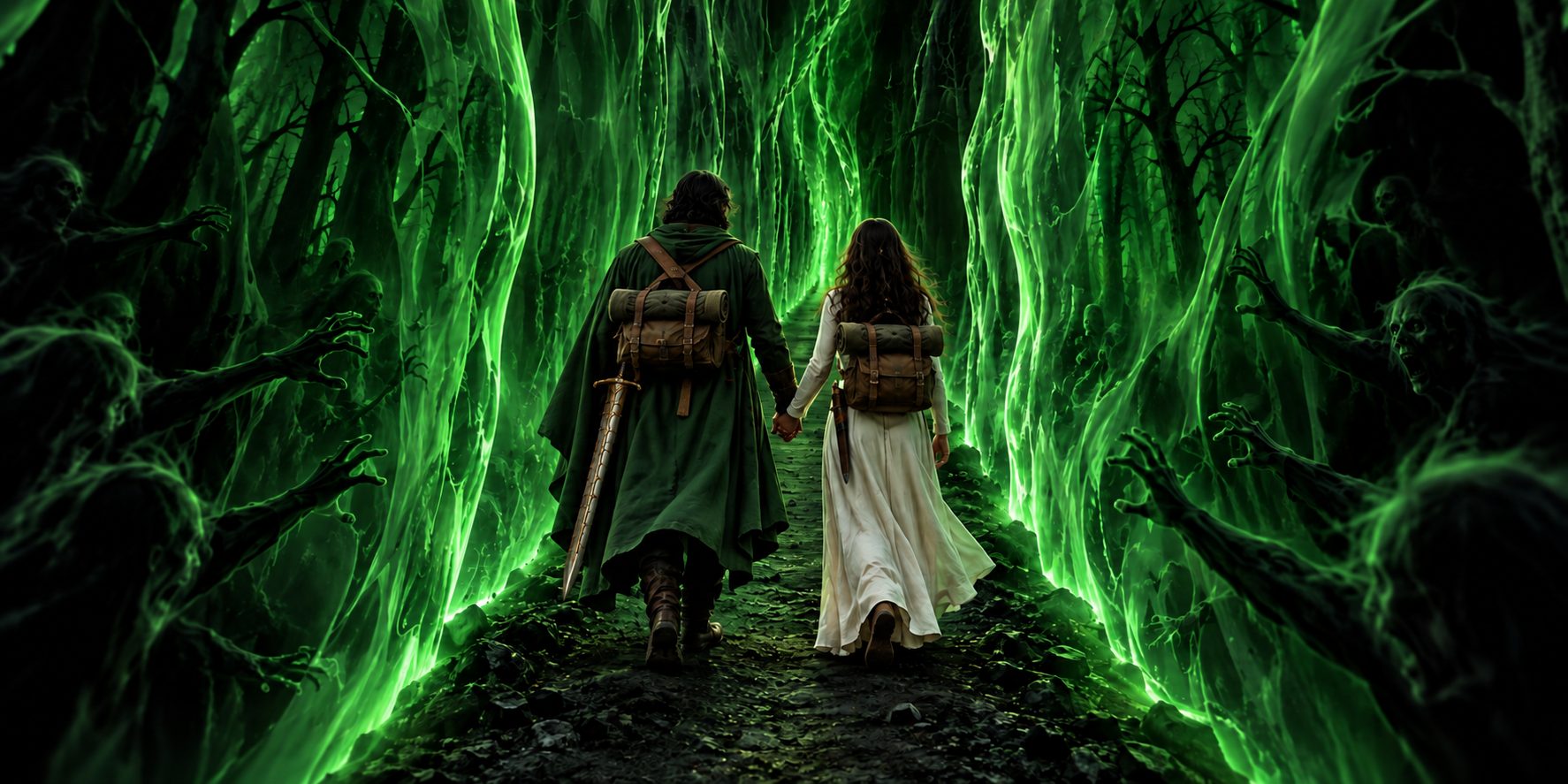
Inside the Boundary, on the path
There is one crossing, and this is it: a thin trail of the living with the world of the dead standing up on both sides, and no choosing where it goes, because one step off it kills you. What waits off it are shadow things, and there are more of them the deeper in you get. When two stand either side of the trail, the only way on is between them, holding on to each other and holding your breath.
The adventure he wrote
A woods guide, and a woman in white
A forest guide named Richard Cypher, living in the shade of that wall, meets a woman being hunted through his woods. Her name is Kahlan Amnell and she is the Mother Confessor of the Midlands, which means she can touch a person and take their will away with love. She has come looking for a wizard.
What follows is a quest, and it works as one: a sword that answers to truth, a grandfather who turns out to be the First Wizard, boxes of Orden with the world inside them, a dragon named Scarlet who is nobody’s pet, a gar named Gratch who is somebody’s friend. A palace that is also a spell. A corridor of living quicksilver that will carry you a thousand miles if you are willing to trust a river with a mind.
The wonders are the road. What walks it is a man handed, one book at a time, every good reason to give up his own life — duty, prophecy, love, mercy, the greater number, the greater cause. He takes each one, and weighs it, and hands it back. What he learns along the way, and what the books are for, is that a life given away as a sacrifice was never anyone’s to take.

The road out of Hartland
Richard Cypher and Kahlan Amnell, walking out of the only country he has ever lived in. He is a woods guide who has never been past that wall of light. She came through it looking for a wizard, and the wizard has been hiding in these woods since before Richard was born.
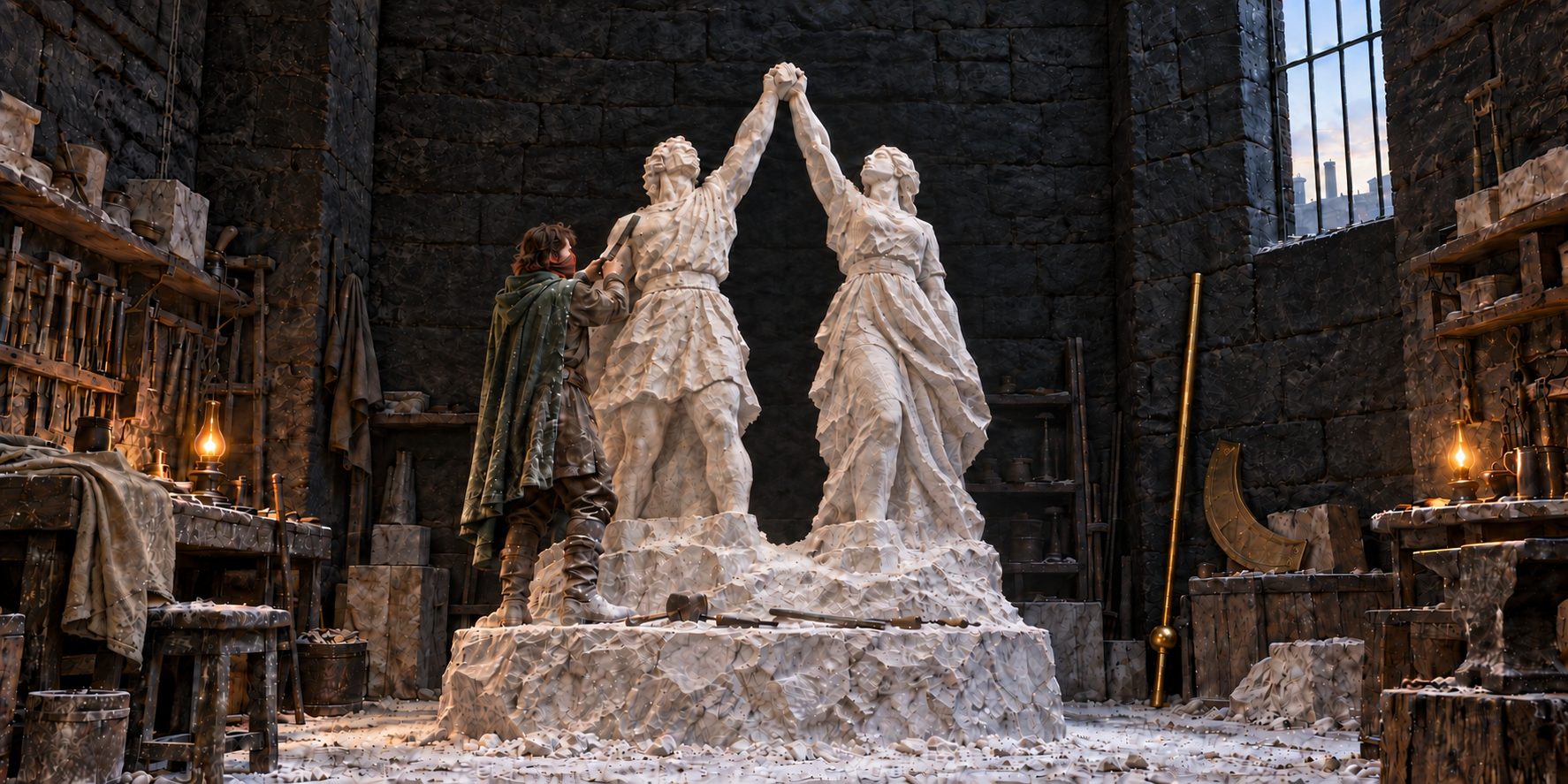
In the carving room, before dawn
In the plaza, at sunrise
Faith of the Fallen
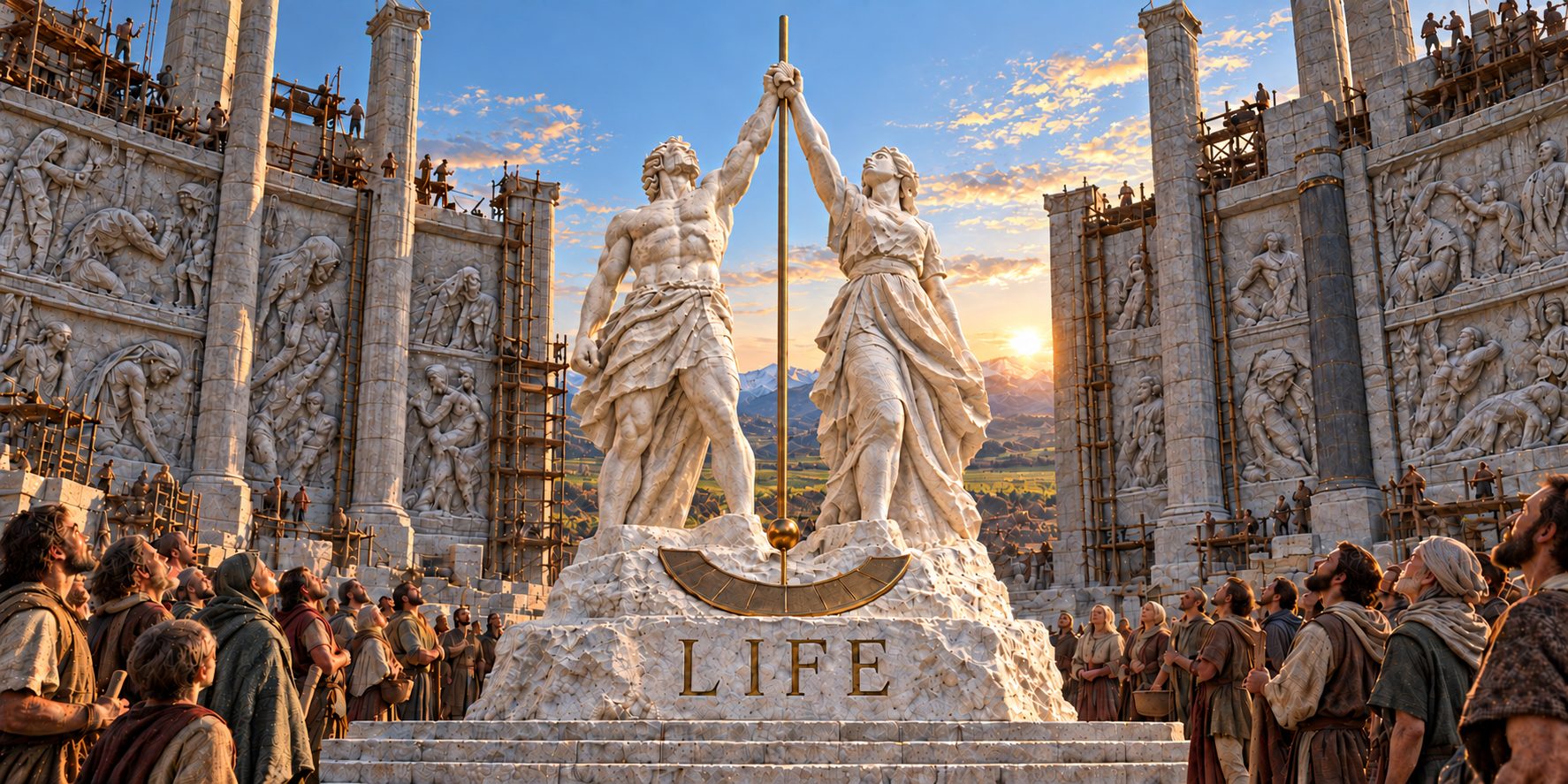
A statue called Life
Nicci takes Richard to the Old World to break him. She wants him to live under the Order, where the doctrine is that man is wretched, that his life is not his, that wanting anything for yourself is the root of evil. She expects the city to teach him despair.
He takes work as a laborer. He saves what he earns. He buys marble. And in a country that has been told for generations that it is worthless, he carves two figures rising nearly twice a man’s height, a man and a woman joined in purpose, holding up the pole of a sundial — and cuts one word into the base: Life.
Word runs through the city, and the city queues all night by torchlight, a line winding back across the palace grounds, a woman in rags handing strangers her bread because it seems like the right thing to do now. At dawn the sun clears the horizon and lights the marble. They shuffle past and reach out to touch the stone, and on the back of the sundial there is a sentence that travels up the queue on people’s lips.
That is the best short answer to what this site is for: a man in a gray city with a chisel, and a queue of strangers reaching out to touch the stone. Being alive is not a debt you were born owing, and he said so in marble where everyone could see it.
Goodkind spent his own life the same way. Written words came hard to him, and he told stories anyway. He built houses with his hands. He painted. He was still racing cars in his sixties. He wrote his first novel at forty-five, and then wrote seven days a week for twenty-six years.
He was not writing about a better world. He was writing instructions for this one.
Where to go from here
Start with the world
Five chapters. Read them in order and they tell one story: the man, the world he made, what it teaches, what was said when it ended, and which book to open first.